

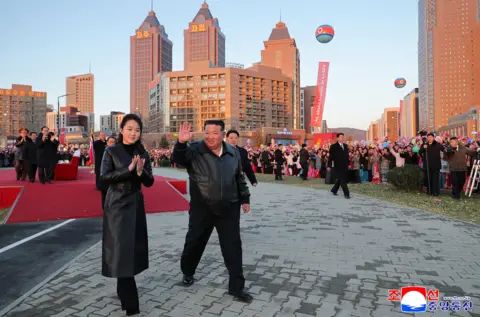
While pledges towards Seoul and declarations to develop the atomic arms programme, a major query persisted at the ongoing political assembly: would the leader's 13-year-old daughter be anointed as the successor?
While definitive confirmation did not surface at the event, it has sparked a significant conversation about Kim Ju Ae's potential as the next leader of the 25m-strong nation, a regime exclusively governed by the Kim family bloodline.
Heightened Presence and Analysis
The girl has become progressively prominent in official broadcasts next to her parent. Nonetheless, much about her is still shrouded in mystery. North Korea has not once publicly published her identity or stated her date of birth.
She was first publicised to the world in 2013. From that point, she is generally estimated to be a teenager, in part on agency estimates.
Indications of Heir Apparent
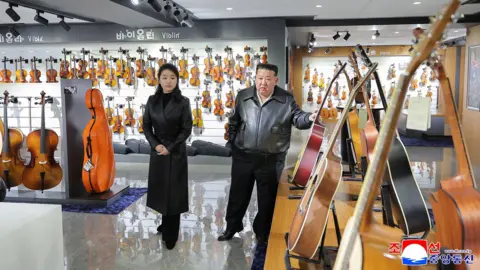
Analysts note several key clues. Her frequent appearances—frequently positioned in the camera view—and the use of respected language traditionally reserved for the supreme leader are seen as clear evidence.
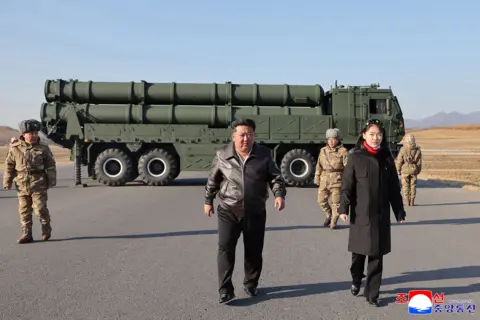
Additionally, her familiarity with the armed forces is viewed an additional crucial factor. She has reviewed troops and weapons alongside her father. Multiple times, high-ranking commanders have been photographed stopping beside her to speak at military events.
"The state media is using language reserved for the supreme leader. It highlights her own cult of personality," says one prominent commentator.
Such strategic familiarization is considered essential, as real authority in North Korea rests with command over the armed forces. To be a legitimate successor, she must appear as a authoritative figurehead.
Discussion Over Sex and Custom
Yet, a considerable counter-argument exists. Some analysts argue that North Korea's profoundly patriarchal culture presents an major hurdle for a female supreme leader.
They point out that women at all level find it hard for fair status. Women leaders in high offices are extremely rare. Common practices also highlight these norms.
"In such cases, they end the trip then go to the rear of their car and expectorate thrice to ward off the bad luck," states a ex- regime diplomat.
Evolving Cultural Norms
Alternatively, other observers argue that the status of females in North Korea has changed notably since the 1990s famine.
During that period, as the official economy faltered, females frequently became the primary breadwinners, turning to black market commerce. This has reportedly led to a gradual change in gender roles.
One scholar who has interviewed numerous defectors states that it is currently less unusual to see women in managerial roles within the country.

"We must not analyze North Korea with our perspective. We must consider them as the royal court," comments the analyst. "What person would have the audacity to challenge someone of royal blood who is assuming the supreme position?"
Succession Moves
Current political developments are also being scrutinized. The promotion of Kim Yo Jong, the leader's sister, to a influential ideological role is seen by some as a step to establish a protector for the young successor.
Ultimately, analysts are divided. Some see the attention on Ju Ae as a strategic ploy to improve the leader's image and normalize another family succession. Others maintain the signals of her training are too clear to overlook.
Regardless, the debate itself may fulfill a purpose for the Pyongyang, keeping international eyes firmly trained on the secretive Kim family dynasty.


